
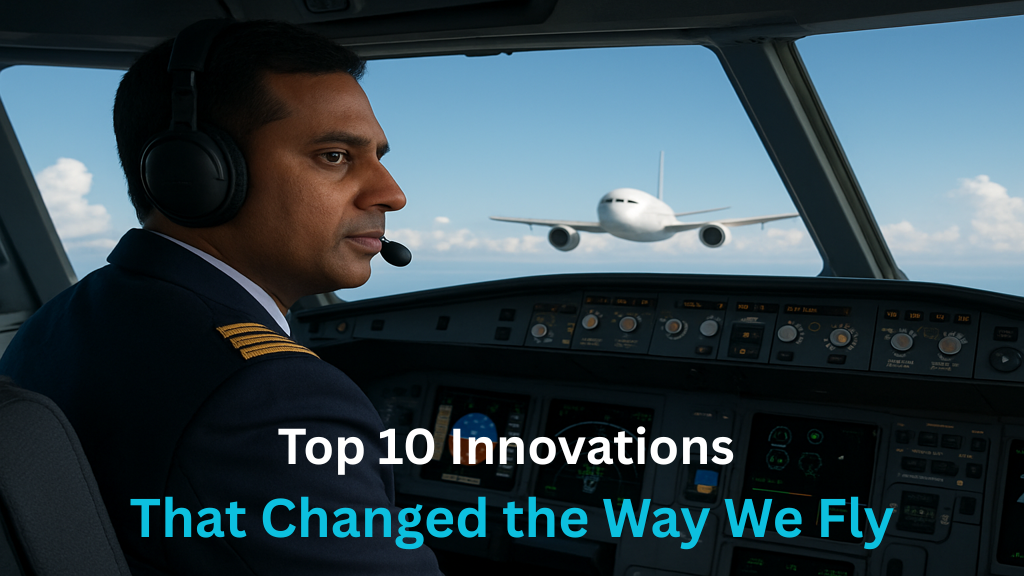
Aviation has always been about pushing boundaries. From the Wright brothers’ shaky first flight to today’s AI-powered cockpits, the journey of flight has been nothing short of incredible. Each breakthrough hasn’t just made flying safer and faster—it has brought the world closer together. Here’s a look at ten game-changing innovations that made aviation what it is today.
1. Jet Engines – Cutting Travel Time in Half
Before jet engines, flying across the ocean was a long, slow process. The introduction of jets in the mid-1900s changed everything. Suddenly, planes were faster, more
fuel-efficient, and capable of connecting continents in hours instead of days. International travel went from being a luxury to something millions of people could access.
2. Autopilot – Taking Stress Off Pilots
Autopilot might sound futuristic, but it’s been around for decades. What started as a simple tool is now so advanced that it can even land a plane in poor visibility. This gives pilots the freedom to focus on big-picture navigation and passenger safety instead of micromanaging every single movement of the aircraft.
3. Flight Simulators – Training Without the Risk
If you’ve ever played a flight sim game, imagine that on a much more realistic and professional level. Today’s simulators allow pilots to practice turbulence, emergency landings, and technical failures without leaving the ground. It’s a safe, smart way to train the next generation of pilots—and schools like Insight Aviation rely on them heavily.
4. Composite Materials – Stronger, Lighter, Greener
Planes used to be made mostly from aluminum. Now, carbon fiber and other advanced composites are the norm. These materials are tough but light, which means less fuel burned and better performance. Modern jets like the Boeing Dreamliner or Airbus A350 owe much of their efficiency to these materials.
5. GPS – Flying With Pinpoint Accuracy
Gone are the days of maps and guesswork. GPS allows pilots to know exactly where they are, chart efficient routes, and avoid unnecessary fuel burn. It has made air travel not only faster but also far safer.
6. Fly-by-Wire – Digital Hands on the Controls
Instead of heavy mechanical systems, today’s planes rely on digital signals. A pilot moves the controls, and computers instantly translate those actions to the aircraft. The result?
Smoother handling, fewer errors, and a major boost in safety.
7. Smarter Safety Systems – Always Watching
From collision-avoidance alerts to weather radar, safety technology is like an extra set of eyes for pilots. These tools warn of incoming traffic, sudden storms, or tricky terrain—helping crews make decisions that keep everyone onboard safe.
8. Wi-Fi in the Sky – Because No One Likes Being Offline
Flying used to mean disconnecting from the world. Not anymore. With Wi-Fi and live entertainment systems, passengers can work, chat, or stream mid-flight. It’s not just convenience—it has made flying feel more like part of the journey than a break from it.
9. Sustainable Aviation Fuel – Toward a Greener Future
One of aviation’s biggest challenges is reducing its carbon footprint. Sustainable Aviation Fuel (SAF) is a huge step forward, cutting emissions by up to 80% compared to traditional fuel. Airlines across the globe are investing in it to make air travel cleaner.
10. Artificial Intelligence – The New Co-Pilot
AI is no longer a buzzword—it’s already shaping aviation. From predicting maintenance needs before breakdowns happen to optimizing fuel use and even helping with air traffic control, AI is transforming how airlines operate. We may even be moving toward more autonomous flights in the future.
Looking Ahead
Each of these innovations has made flying safer, faster, and more sustainable. And this is just the beginning.
At Insight Aviation, we believe every aspiring pilot should not only learn to fly but also understand the tech that’s redefining aviation. The future of flying isn’t just about reaching destinations— it’s about doing so smarter, greener, and more connected than ever before.
FAQs
Q. How did jet engines change air travel?
A. They cut travel time in half, making long-distance flights faster and more accessible.
Q. Why is autopilot important for pilots?
A. It reduces pilot workload by handling routine controls, even landing in poor visibility.
Q. What role do flight simulators play in pilot training?
A. They let pilots practice real-life scenarios safely on the ground.
Q. How do composite materials improve modern aircraft?
A. They make planes lighter, stronger, and more fuel-efficient.
Q. What advantage does GPS bring to aviation?
A. It provides pinpoint navigation, ensuring safer and more efficient routes.
Q. What does “fly-by-wire” mean in aircraft?
A. It replaces heavy mechanical controls with digital systems for smoother and safer flying.
Q. How do smarter safety systems protect flights?
A. They alert pilots to collisions, bad weather, and dangerous terrain in real time.
Q. Why is in-flight Wi-Fi a big innovation?
A. It keeps passengers connected for work, entertainment, and communication mid-flight.
Q. How does Sustainable Aviation Fuel help the environment?
A. It reduces carbon emissions by up to 80% compared to traditional jet fuel.
Q. How is AI transforming aviation today?
A. It predicts maintenance, optimizes fuel use, and supports safer flight operations.














 Lockdown effects on Preparation for