

The Code That Keeps Planes Safe
Every time a plane lands safely, there’s a secret code helping behind the scenes. These codes are called Squawk Codes, and they’re super important for flying safely. They help air traffic controllers see where each plane is and what it’s doing.
Whether you’re a student in an aviation school, or even just an interested parent, discovering what squawk codes are a great way to start. If you dream of becoming a pilot, well, there you have it! At Insight Aviation, we teach future pilots everything they need to know about how these codes maintain safety of the skies. Squawk codes aren’t literally numbers but an important aspect of how airplanes communicate with the ground folks.
What Are Squawk Codes?
Squawk Codes are four-digit numbers that a pilot enters into a part of the plane called a transponder. This code helps radar and Air Traffic Control (ATC) know which plane is which. It also shows the plane’s position, height and speed.
So, what are squawk codes in simpler terms? Imagine every plane has a digital license plate. Just like cars have numbers to tell them apart, squawk codes help keep track of every plane in the sky. With so many planes flying every day, these codes help avoid confusion and keep things organized. That’s why learning aviation squawk codes is one of the first things taught in pilot training and Aviation Terminology classes.
How Squawk Codes Work During a Flight
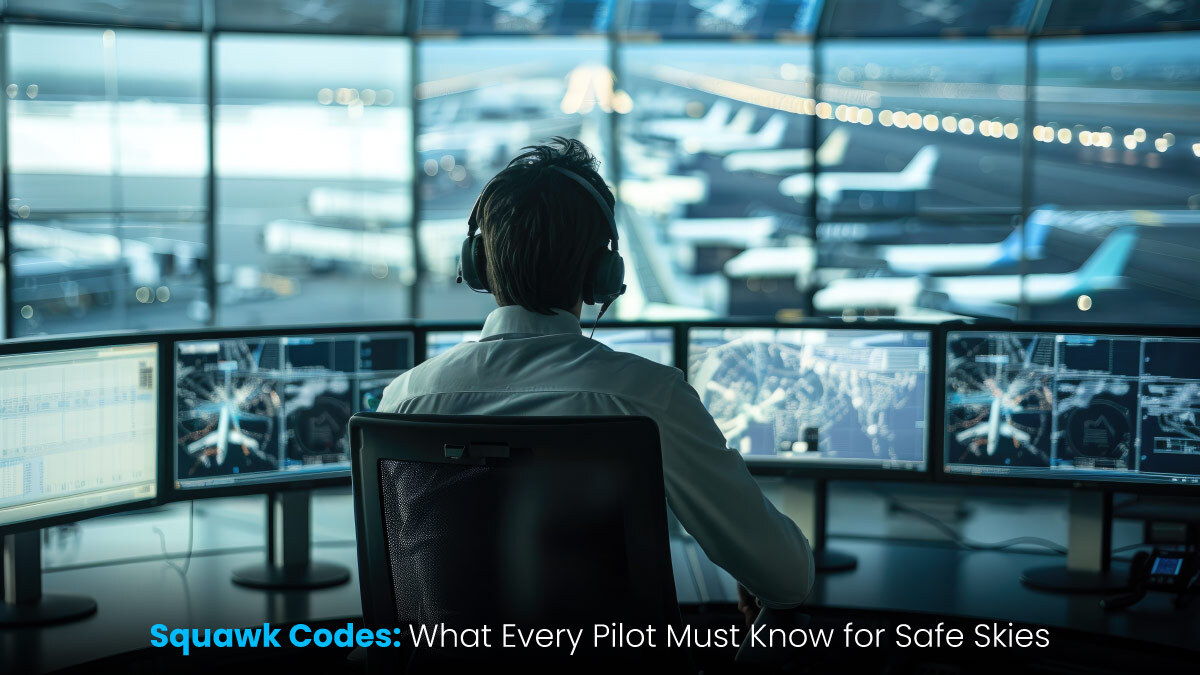
Before a flight takes off, ATC gives the pilot a Squawk Code. The pilot puts it into the transponder. Once the plane is in the air, the transponder keeps sending the code along with the plane’s location. This helps air traffic controllers watch all the planes on their radar screens.
Here’s an example of how a pilot and ATC might talk:
ATC: “Insight 102, squawk 4621.”
Pilot: “Squawking 4621, Insight 102.”
That short talk lets ATC match the radar signal to the exact plane. In busy airspaces like big airports, this system is super important. It helps avoid mistakes and keeps everything running smoothly.
Different Kinds of Squawk Codes
There are two main types of Squawk Codes: normal ones and emergency ones.
Normal Squawk Codes:
These are given by ATC during regular flights. Each plane gets a different code so radar systems don’t get confused. Some common ones include:
- 1200: A code used in the U.S. when a plane is flying by sight (VFR).
- 2000: Used in Europe when no specific code is given (IFR).
- 7000: Often used in Europe for basic flights not being watched closely.
These help controllers know where planes are, even during calm, regular flights.
Emergency Squawk Codes:
These are special codes used only in emergencies. They include:
- 7500 – For hijacking. This lets ATC know silently that something is very wrong.
- 7600 – For when the plane can’t talk to ATC.
- 7700 – For any serious emergency, like a fire or sick passenger.
Pilots must know these by heart. In pilot training, they practice using them again and again. Mistakes can cause big problems, like panicking air controllers or wasting rescue resources. At Insight Aviation, students use simulators to learn how to react calmly and correctly in these situations.
Learning Squawk Codes in Pilot Training
At Insight Aviation, students get hands-on practice with Squawk Codes. In classes and in the simulator, they learn how to:
- Talk to ATC and enter codes correctly
- Handle emergencies with the right squawk code
- Use key Aviation Terminology
- Work with the crew and air traffic teams
In training, students fly through made-up emergencies so they’re ready in real life. They also learn how picking the wrong code can mess up air traffic and even delay help in an emergency. That’s why we make sure cadets don’t just memorize codes — they understand why each one matters.
We train our students to stay calm and make smart decisions. By the time they graduate, entering the correct squawk code becomes second nature.
Why Squawk Codes Are So Important
Squawk Codes do more than help identify a plane. They help keep everyone in the sky safe. They are used to:
- Keep planes from crashing into each other
- Send out alerts fast when something goes wrong
- Let ATC track and guide every flight
- Help planes move from one airspace to another
If a pilot suddenly enters squawk 7700, ATC knows to act right away. They may move other planes out of the way or call emergency help. These codes help everyone act faster, which can save lives.
By using squawk codes the right way, pilots and Air Traffic Control work as a team. These codes are part of global aviation rules, so pilots everywhere use them. It’s one reason flying is one of the safest ways to travel today.
Even if a plane is flying in a country with a different language, the squawk codes stay the same. This helps ATC know what’s happening instantly — no confusion, no delay.
Conclusion: More Than Just Numbers
In flying, every number means something important. Squawk Codes aren’t just random digits—they’re safety tools that help pilots and controllers protect lives.
At Insight Aviation, we make sure every student learns how to use these codes with confidence. We don’t just teach facts — we prepare future pilots for real challenges in the air.
Want to start your pilot journey? Come explore our training programs and see how we prepare students for real-world flying. With us, you’ll learn to fly safely, smartly, and confidently.
FAQ’s
Q: What is a squawk code in aviation?
A: A 4-digit transponder code for ATC to identify and track your aircraft.
Q: Are squawk codes unique for every flight?
A: Yes during flight. Once you land, ATC can reuse them.
Q: What does “squawk” mean?
A: To set a specific transponder code (e.g. “Squawk 7000”).
Q: What are the emergency squawk codes?
A: 7500 = hijack, 7600 = radio fail, 7700 = general emergency.
Q: What is Mode A, C, and S?
A: Mode A sends the code; C adds altitude; S adds ID and data.
Q: Can squawk codes be reused the same day?
A: Yes, but never by two planes in the same area at once.
Q: Who assigns squawk codes?
A: Air Traffic Control—they tell you which code to enter.
Q: When should a pilot change their squawk?
A: Whenever ATC instructs, during handoffs, or switching to VFR code.